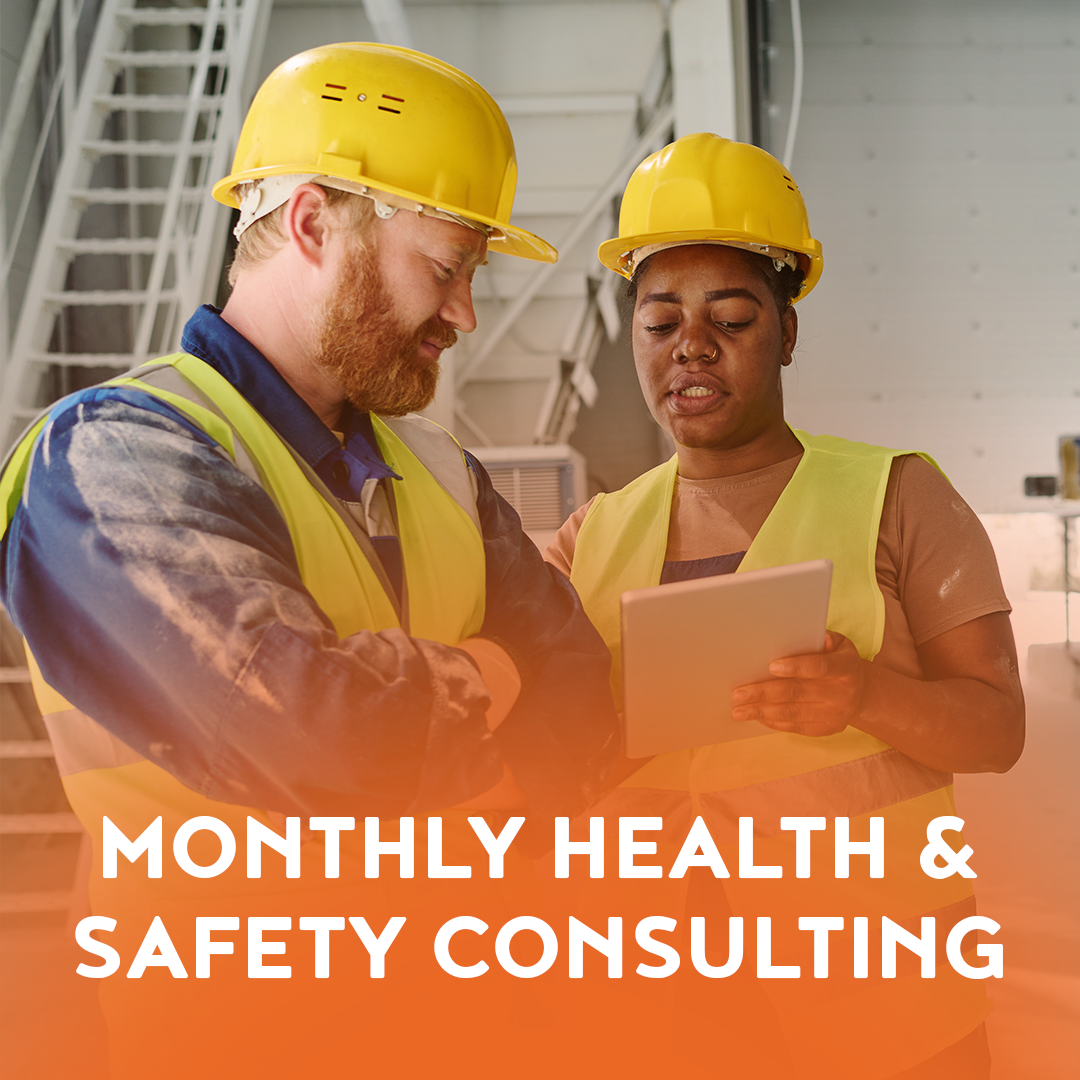
20 Definitive Tips On International Health and Safety Consultants Services
Wiki Article
The World You Live In, Your World, Your Workplace- A Guide In International Health And Safety Services
When a business has its operations spread across many countries, the workplace is not a single place or an established location. It's a distributed network of sites and each with an individual legal, cultural and operational setting. The old approach of imposing security guidelines from the headquarters of every overseas outpost has flopped frequently, creating resentment among local workers and exposing organizations that have parent companies to liability they did not know existed. International health and safety solutions are evolving to meet the needs of today's workforce, providing a hybrid model that preserves local sovereignty while maintaining global exposure. This guide details the 10 fundamentals to know about how the modern international health and safety programs actually function, extending beyond theory to the practical details of safeguarding a global workforce.
1. The difference between Global Standards and Local Legislation
One of the first lessons that safety professionals from around the world discover is that international standard and regional laws aren't the same. A business may have great internal standards based upon ISO frameworks but if those standards conflict with local regulations to be followed in Indonesia or Brazil or Brazil, the local law prevails every time. International health and safety experts provide a way to manage this conflict, helping organisations build systems that meet or surpass the standards of the world while remaining legally and legally compliant in each jurisdiction where they are operating. This requires professionals who are aware of internationally-based benchmarks as well as specific requirements of a number of individual countries.
2. The Three-Legged Stool of International Safety Services
Effective international health and safety management is based on three interconnected pillars, namely expert consultation, reliable software platforms and locally delivered services. The consulting segment provides advice and direction in the area of technology helping organizations to design strategies that cross borders. The software segment provides the infrastructure for data collection tracking, reporting and visibility. The local services leg--including training, audits, and assessments delivered by in-country professionals--ensures that global strategies translate into local action. Eliminate any one of these legs, and the structure gets unstable making either theoretical plans but with no implementation, or local activities hidden from headquarters.
3. Auditing Across Cultures Requires Local Knowledge
Audits on safety and health for international audiences provide challenges that audits conducted in the US simply cannot meet. Auditors must face barriers in the form of language, cultural perceptions towards safety, and drastically different practices for documenting. A auditor from Europe arriving at a factory in Vietnam cannot apply European methods and expect exact results. The most effective international audit companies use auditors that are native to the region or with extensive in-country experience who understand not only the technical standards but also the way work happens within the local cultural context. Auditors who are native to the region serve as cultural translators, but also as they serve as technical assessors.
4. Risk Assessment Is Never One-Size-Fits-All
A risk assessment procedure that is ideal for an office in London could be totally inappropriate for the construction site in Dubai or an underground mine in Chile. International safety organisations recognize the fact that while risk assessment practices are generally applicable the application of them must be extremely localized. Professionals who are effective maintain libraries of particular risk profiles and assessment templates, allowing them apply assessments that reflect local conditions and not generic international norms. This means that they can take into account regional hazards--cyclones in the Philippines as well as earthquakes in Japan and political instability in certain regions--that global frameworks could otherwise ignore.
5. Software has to function when the Internet Does Not
A lot of international software platforms fall short because they are based on constant, high-bandwidth internet connectivity. In reality, most global workers are unable to connect at high-end offshore platforms, remote mining factories, and remote mining the developing world often have no reliable internet connectivity. Mature international health and safety software solutions have a keen understanding of this with robust offline features that lets users record incidents, complete assessments, and gain access to documents even without connectivity while synchronising themselves automatically when internet connections return. This pragmatic approach to technology differentiates the platforms designed for global fieldwork from ones that are designed for use at headquarters exclusively.
6. The Consultant as Translator Between Worlds
International health and safety specialists play a role that extends way beyond providing technical guidance. They act as translators--not just of the language, but also of expectations regarding practices, regulations, and rules. A consultant working with the work of a Japanese parent company that has operations in Mexico must be able to comprehend not just Mexican safety laws but also Japanese corporate reporting requirements and also be able clarify each of them in terms they comprehend. The bridging role is one of the greatest benefits that international consultants offer, as they can avoid misunderstandings that so often derail worldwide safety initiatives.
7. Training That Respects Local Learning Cultures
Safety-related education and training developed in one country may not transfer well across borders without significant modifications. Instructional techniques that work in Germany may not be able to work within Thailand in a country where the dynamics of classrooms and attitudes toward authority can differ in a significant way. International services for health and safety that provide training programs have come to adapt not just the language used in the material they provide but also their methodology to fit the local culture of learning. This may involve more hands-on learning within certain areas, more formal instruction in the classroom in others but also paying attention to who is delivering the training and the way they are perceived locally.
8. The increasing importance of Psychosocial Risk Management
Health and safety in international settings are increasingly expanding beyond physical safety to address psychological risks like harassment, stress, emotional health, and burnout. All of these appear differently in different cultures. What is considered unacceptable in one jurisdiction could be considered acceptable workplace behavior for another, but multinational businesses must be able to maintain the same ethics across the world. International safety professionals can aid organizations in navigating this tricky terrain by establishing policies which follow local norms, while still adhering to global norms, and educating local managers to recognize as well as address any psychosocial issues appropriately.
9. Supply Chain Pressure is Driving Service Demand
Multinational corporations are more often being held accountable for the health and safety conditions throughout the supply chain, and not just within their propre operations. This pressure to be accountable and protect their reputations is causing the need for international health and safety services that are able to assess and improve conditions at supplier factories around the world. These services often combine auditing--checking the compliance of suppliers with buyer standards, and assistance in building capacity, helping suppliers build their own safety management capabilities instead of simply policing their mistakes.
10. The shift from periodic engagement to Continuous Engagement
The past was when international health and safety services were based on a basis of project: a business hired consultants for an audit, prepare a report and go on leave. The modern approach is significantly different and characterized by continuous involvement via connected software platform. Clients maintain ongoing visibility of their overall safety status, consultants provide regular support rather that one-off suggestions, and local service providers offer their services on an as-needed basis coordinated through the central platform. The transition from periodic to continuous engagement shows that safety is not one-time project that has a defined date, but a continuous essential operational requirement that requires constant monitoring. See the top rated health and safety software for blog examples including health in the workplace, safety management, health in the workplace, health safety and environment, job safety assessment, health and safety jobs, health at work, workplace health, safety at construction site, safety measures and best health and safety consultants for blog advice including safety website, occupational safety specialist, safety tips, occupational health services, health and safety, job safety and health, health hazard, safety day, safety manager, worker safety and more.

From Audit To Action The Process Of Streamlining International Health And Safety With Integrated Software
The graveyard of safety and health programs has been strewn with impressive audit reports. Beautifully bound, meticulously documenting with sharp insights and sensible suggestions, but completely useless because nobody has ever acted on the recommendations. This gap between audits and action has haunted the field since its beginning. Audits produce findings; action calls for modification. Both are distinguished by everything that makes organizations human such as competing priorities resources, unclear responsibilities, and the fact that the urgent issues of today are always more pressing than yesterday's audit recommendations. Integrated software does not magically bridge this gap, but it creates the infrastructure which makes closure feasible. When every discovery is assigned an owner, every owner has an end date, and every deadline has a consequence that is visible to executives, the road towards action becomes not only possible, but inevitable. This is the essence of streamlining international health & safety actually means.
1. The Audit Is Not the end of the world, it is the Beginning
Traditional wisdom regards the audit report as the deliverable. The consultant provides it, the client receives it and both see the assignment complete. Integrated software turns this idea upside down. The audit will not be completed until every problem is dealt with, every corrective procedure evaluated, and every lesson can be incorporated into ongoing activities. The software records this entire lifecycle of audits, transforming them from discrete events to continuous improvement cycles. Consultants remain engaged through the process, providing advice about the procedure and evaluating its efficiency rather than simply disappearing after delivering bad news.
2. Every finding requires an owner The Software helps enforce Ownership
The main reason why found in audit findings that aren't addressed is because no one is accountable for their handling. They are inserted into agendas of meetings, discussed by safety committees and then passed from manager to manager, then overlooked. This integrated software prevents this diversion in responsibility by distributing every report to a specific person, with their acceptance recorded in the system. That person receives notifications, the manager is aware of their task checklist, and progress or even the lack of it is seen by everyone. Ownership becomes not just notion, but an operational reality, enacted by the tool everybody uses on a daily basis.
3. Deadlines Without Visibility Are Wishes not commitments
Many audit reports have the dates of target for corrective actions The dates are just on paper, inaccessible until someone pulls reports and scrutinizes. With integrated software, deadlines are visible continually, including on dashboards, in notifications and escalation workflows that alert senior management when deadlines reach without complete. This transparency changes deadlines from indefinite to operational. Managers can be confident that their performance with regard to safety activities is being evaluated in conjunction with production metrics including quality indicators and every other factor that determines their effectiveness.
4. Root Cause Analysis Prevents Recycling of the findings
Organizations that aren't addressing primary causes are audited the same findings each year. Security guards get replaced but the design that underlies it is dangersome. The course is repeated, however the factors in culture that lead to unsafe behavior are not addressed. Integrated software facilitates proper root cause analysis, by offering defined methods within the platform, demanding more thorough inquiry before corrective action is confirmed, and also determining whether similar findings appear across multiple websites. When patterns appear--the exact type of result appearing over and over again--the program will alert the system for attention instead of allowing indefinite local solutions.
5. Verification requires evidence, not the making of assertions.
"How can we tell if the issue is repaired?" This should be the first question to ask following every corrective action, however in practice, it's rarely the case. Someone asserts completion, the file is closed and everyone goes on. Software integration requires proof of completion. photographs of the completed repairs, recording attendance at training sessions, updated procedures documents, and signed-off verification checks. The evidence is then attached to the discovery, and then viewed by the consultant responsible for the finding or internal auditor, and then incorporated for the audit trail. Closure requires demonstration, not just declaration.
6. Learning Loops Connect Websites Across Borders
When a factory in Brazil tackles a question about tagout or lockout procedures, it is expected that the information can benefit facilities in Mexico, India, and Poland. With traditional systems, it seldom happens. Integrated software can create loops of learning, not only the event as well as its resolution, but also foundational lessons they provide, making them searchable and available to other sites who face similar dangers. A safety supervisor in Vietnam could search the system on the basis of "confined spaces incidents" in order to get not only statistics but detailed accounts of the incident, its causes, and how it was fixed, as well as contact details for the individuals that did the fixing.
7. Resource Allocation is now driven by data
Each company has a set of resources for improvements in safety. The issue is always what actions to prioritize. Integrated software supplies the information necessary for rational prioritisation. the risk levels that are associated with different findings, the cost and complexity of different corrective measures, and the frequency of patterns that reveal systemic issues. Management can not simply see the list of issues that need to be addressed however, but a risk-ranked set of improvements, allowing them to spend money and time in areas where they will most impact the organization rather being reactive to whoever complains most loudly.
8. Consultants Shift into Report Writers to Implementation Partners
If consultants understand that all their discoveries will be tracked through to resolution in an integrated system, their relationship with clients is transformed. They stop writing reports designed to protect themselves from liability and start designing corrective actions that are actually implemented. They remain available during implementation by answering questions, making adjustments to their recommendations based on actual constraints and ensuring that their procedures achieve the outcomes they intended. Consultants become partners in the improvement process, not a judge outside, building relationships that span many audit cycles.
9. Benefits from Regulatory and Insurance Follow Experimentation
Insurance companies and regulators are increasingly able to distinguish the companies with audit results and those that follow up on audit findings. When a situation arises or inspections occur, having detailed, well-documented action histories demonstrates good faith and systematic management. Integrated software helps you keep this record immediately, with complete trails that detail every discovery or incident, every designated owner, every completed action, every verification. This evidence is used to influence the regulatory outcome as well as insurance premiums and the determination of liability in ways that paper trails cannot match.
10. Culture shifts away from identifying the problem in a way to fix the problem
Perhaps the most significant effect of closing the audit-to-action gap is one of culture. When employees see the impact of audit findings on evident changes in the environment--that reporting hazards leads to a real-time change in what is happening -- they become comfortable with the system. Once managers understand that safety-related actions are monitored in tandem with their production goals, they incorporate safety into their daily routines instead of considering it as an additional burden. This shifts the company from the mindset of finding fault, and identifying issues and blaming others--to creating a culture that focuses on fixing problems with the intention of for compliance to not be proven, but to continue to improve. This change in culture is the ultimate return on the investment in integrated software and it is only possible with audits that consistently result in swift action. See the most popular health and safety consultants for site info including workplace safety training, safety day, health safety and environment, safety inspectors, workplace safety courses, workplace safety tips, job safety and health, safety tips for work, safety at construction site, risk assessment template and more.